
My Good English
My mother’s surgery reminded me what I use it for.

I’ve always loved my good English. Growing up, I knew that it was valuable, maybe even more so than the food in our fridge or our new color TV. I understood that it was the key to navigating our family life. And as the oldest, it was my inglés that opened doors—in the immigration and social security offices, at the doctor and Parent Teacher Night, and even at Burger King.
“Patricia, ven, habla con ellos.”
I was always hablando con ellos. And I still am.
My mom had spinal surgery earlier this week. It felt extra scary considering her age, and even unnecessarily risky. (She’s 79 years old—but don’t tell her I told you or she’ll yell at me.) My siblings and I were anxious as the day approached.
“Ma, are you sure you want to do this?” we asked. Her answer was always the same. “Yes, you don’t know my pain. Also, if I die don’t you dare bury me in the Dominican Republic. I’ll haunt you forever.”
Alrighty, then.
Before heading to Providence, I called the surgeon to go over the procedure one last time. Mami found that unnecessary (“pa’ qué?!”) but I ignored her and polished my good English in preparation. I needed the doctor to see me—NYC-born, English-speaking eldest daughter of a Dominican immigrant—as someone to be listened to and respected. And I was ready to use every vocabulary word and speech intonation to make them understand that my mother was a rare jewel who needed to not only survive this surgery but come out of the other side with a back and legs that were ready to dance again.
It was code-switching at its highest level.
The morning of the surgery had finally arrived. Mami was giddy, excited, happily submitting her arm for the IV drip and smiling at the anesthesiologist, the nurses, the surgeon. She was imagining a near future without pain. Of doing her beloved chores without wincing. Of taking a bus to Marshall’s on her own and maybe even without her “husband”—her walking cane.
We shared the same dream but remained cautiously optimistic. We can Google. We can read the stories that don’t end well. Our good English gave us access to more information—but also, more fear.
My sister, Irene, sat at the foot of Mami’s cot. I sat to Mami’s right, the “head of the table,” ready to whip out my good English. I met every hospital staffer with the same professionalism and respect, the same level of advocacy. I was Mami’s publicist, her bodyguard, her ambassador. Her voice.
“Hello! I’m one of your nurses for today…”
Their own voice would trail off when Mami didn’t respond. Their eyes shifted to me.
She doesn’t speak English, I’d explain. Sometimes there was a flicker—surprise, maybe something else—in their faces. It didn’t matter. That’s what I was there for.
The scene repeated itself over and over, and each time I felt a quiet pride. Ask me anything, I’d think. Months of talking to her doctors in preparation for this day had paid off. I knew the Spanish-to-English translation for every relevant term: spine, fracture, disc, nerve. I think even Irene was impressed.
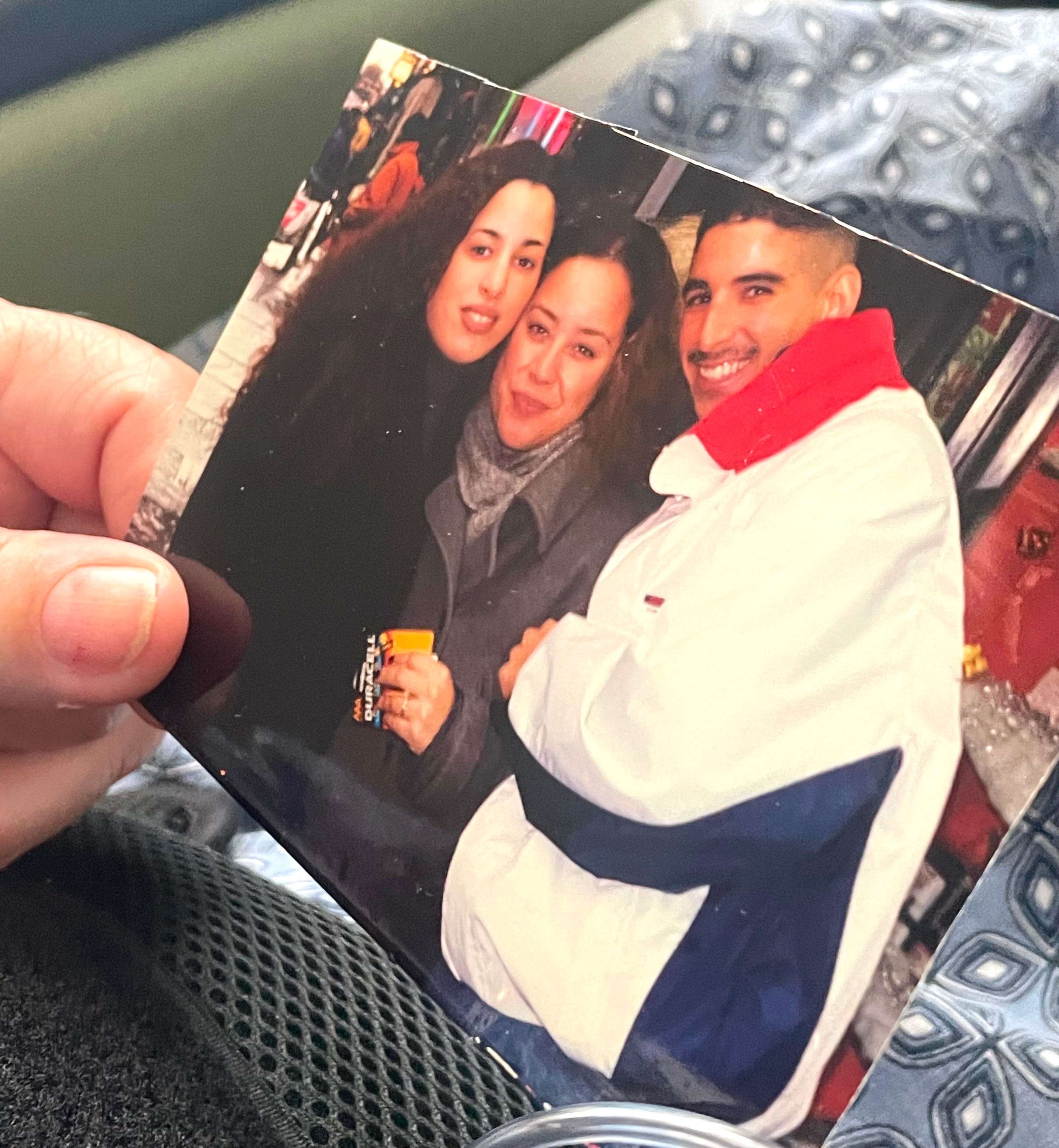
Finally, it was time for her to be wheeled into surgery. My mom, who had been so joyful all morning, suddenly lost her composure. The nurses noticed, too, and asked what was wrong. Mami wanted me to reach into her tote and hand her a photo of her three kids.
This time I was the one asking, “pa’ qué?”
It was a real question. What did she plan to do with this old photo of Papito, Irene, and me from the early 90s? She said she wanted to hold it during surgery.
The request caught me off guard. For a moment, both my good English and my good Spanish disappeared. I defaulted to humor. Before my sister could finish saying, “Patricia, just give her the photo,” Mami burst into tears.
I handed it to her. She gripped it with the ferocity of a mother who knows exactly what she’s holding.
Irene and I kissed her and told her we loved her. We’re not kissy, love-you people. But if there’s ever a moment to change, this was it.
The good news is that Mami’s surgery went extremely well. The bad news is that she yelled at us for filling the hospital room with our guiri guiri (that’s what our English sounds like to her Dominican ears).
“Hablen en español, por favor,” she said.
Guess it was time to put away my good English. For now, it had served its purpose. It always does.
I’m so thankful for your good English ❤️.
💛